Bathroom and Kitchen Tiles in Dubai: Choose, Fix and Waterproof
Dubai Repair Pro is a Dubai LLC with its own team of tile installers. We retile bathrooms and kitchens in apartments and villas: floors, walls, showers and backsplashes. These are the two hardest rooms in the home for tile. Water, steam, grease, heat and daily cleaning all hit the surface, and the work underneath the tile matters more than the tile itself.
Last updated: 16 October 2026
On this page
- Bathroom tiles in Dubai: what we do
- Tiles for a bathroom floor in Dubai
- Bathroom wall tiles in Dubai
- Showers and wet zones
- Choosing bathroom tiles: material and finish compared
- Kitchen tiles in Dubai: floors, walls and backsplashes
- Kitchen floor tiles in Dubai
- Kitchen backsplash tiles
- Grout and sealant in wet rooms
- Small bathrooms and rented homes
- How a bathroom or kitchen retile runs, with timings
- Bathroom and kitchen tiling cost
- Retile or regrout?
- Bathroom and kitchen tiles Dubai: where we work and how to get a quote
- Frequently asked questions about bathroom and kitchen tiles in Dubai
This page is for people planning to retile a bathroom or a kitchen. It explains how to choose bathroom tiles and kitchen tiles in Dubai, what a wet floor and a shower need, how kitchen floors, walls and backsplashes differ, how grout and sealant behave, how long a retile takes, what it costs and when regrouting is enough. For general fixing methods and rates across all rooms, see our tile fixing page.
The quickest way to start is to send photos of the room on WhatsApp at +971 55 209 9785, with the approximate size. Some rooms we can price from photos, and others need a visit. A site inspection costs AED 100.
Bathroom tiles in Dubai: what we do
We offer bathroom tiles in Dubai as a full retile, a single floor or wall, a shower and a repair. The table below lists the main bathroom and kitchen jobs and who usually books each.
| Job | What it covers | Who usually asks |
|---|---|---|
| Full bathroom retile | Floor, walls, shower, waterproofing, grout and finishing | Owners renovating, landlords upgrading |
| Floor only | Floor tiles and waterproofing, with walls left as they are | Owners with a worn or slippery floor |
| Walls only | Wall tiles, trims and niches | Owners who want a new look |
| Shower and wet zone | Shower tray area, walls, niche, drain, waterproofing | Anyone with a leaking or tired shower |
| Repair and regrout | Cracked or loose tiles, regrouting, resealing | Anyone whose tiles are mostly sound |
| New build and fit-out | Bathrooms in new apartments and villas | Developers, contractors |
The same team that quotes your job fixes it. We employ our own installers and do not subcontract the tiling.
We can supply the tiles and fix them under one quote, or fix tiles you have bought. If you buy your own, we check the delivery for quantity, breakage and batch before we start. We also fit the small things that belong to tiling: niches, shelves, drains and edge trims.
If your bathroom also needs painting, waterproofing as a separate job or a repaint of the walls and ceiling, one team handles it, so the tiler is not waiting on another trade.
If the whole bathroom is being redone, our bathroom renovation in Dubai page shows where the tiling sits in the order of work.
Tiles for a bathroom floor in Dubai
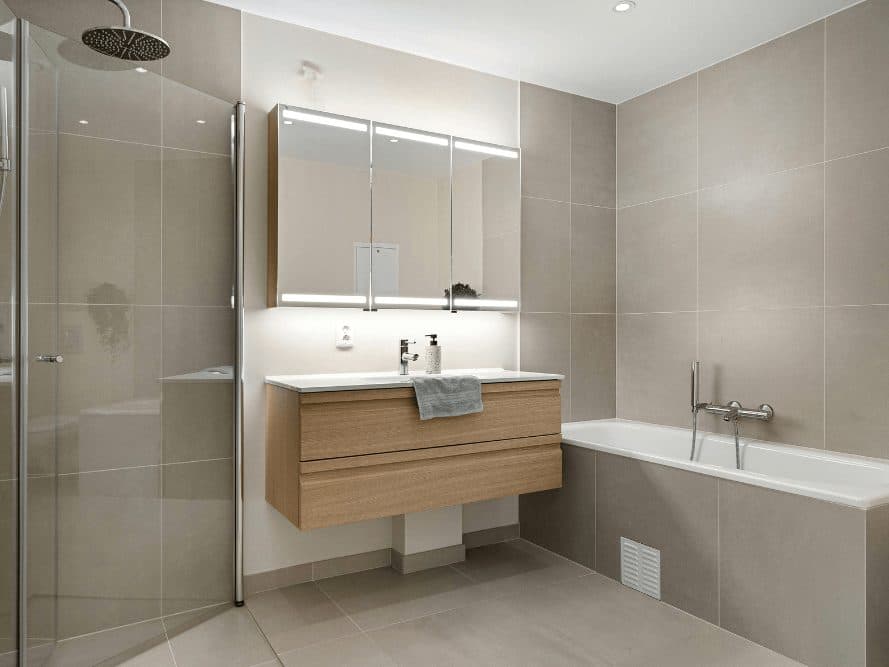
Choosing tiles for a bathroom floor in Dubai starts with one question: will it be safe when wet? A bathroom floor sees water, soap and bare feet, and a glossy tile that looks excellent in the showroom can be hazardous in use.
Slip resistance
Slip resistance is a rating you can ask for. Tile manufacturers test slip resistance, and the results are published as ratings. Two scales are commonly used in Europe: the R scale (R9 to R13) under DIN 51130, and the A, B and C classes under DIN 51097, which is for barefoot wet areas. Ask your tile supplier which rating the tile has, and whether it is suited to a bathroom floor. A rating on the box is more useful than a description like "anti-slip".
Matte or micro-textured porcelain is the usual choice for wet zones. A rating belongs to a specific product, so ask the supplier for the rating of the actual tile you are buying.
Texture and finish
| Finish | What it feels like | Where it suits |
|---|---|---|
| Polished or glossy | Smooth, shiny | Walls, not wet floors |
| Matt | Smooth, no shine | Dry bathroom floors, walls |
| Textured or structured | Slightly rough to the touch | Wet floors, shower floors |
| Mosaic | Many joints, grip from grout lines | Shower floors, curved floors |
Textured tiles grip better and clean less easily, because soap and dirt sit in the texture. A mosaic floor has many grout joints, which add grip and also need cleaning and sealing. We help you balance grip and cleaning for your household.
Tile size
Smaller tiles follow slopes better, and they are common in showers where the floor falls to a drain. Larger tiles have fewer joints and look cleaner on a flat bathroom floor. A very large tile on a floor that has to slope is hard to fit, because the tile has to bend to the fall, or be cut into pieces. We choose the size with the layout and the fall in mind.
Falls to the drain
Water has to run to the drain. A bathroom floor with a shower needs a fall, a gentle slope, towards the drain, and the tiles are laid to follow it. A floor that falls the wrong way or has dips holds water, and standing water leads to stains, mould and slipping. We check the fall at the inspection, and we correct it with a screed before waterproofing.
Colour and cleaning
Light floors show soap scum and hair, and dark floors show limescale and water spots. Neither colour hides everything. Choose the one whose marks you mind least, and plan the cleaning to match.
Underfloor heating
If you plan underfloor heating, tell us before choosing the tile and adhesive. The tile, the adhesive and the screed all need to suit a heated floor, and the heating system has to be switched on and off in stages after tiling, following its manufacturer's instructions. We follow the instructions of the heating system and the adhesive.
Bathroom wall tiles in Dubai
Bathroom wall tiles in Dubai do two jobs: they protect the wall from moisture and they set the look of the room. The choice is wider than for floors, because grip is not an issue.
How high to tile
| Area | Usual tiling height | Why |
|---|---|---|
| Shower walls | Full height to the ceiling | Constant water and steam |
| Around a bath | Full height or at least above the shower head level | Splashes and steam |
| Basin wall | A splashback or half height | Splashes |
| Other walls | A tile border or paint above | Lower cost, less moisture |
Full-height tiling protects the wall best, and costs more. Painted walls above half-height tiling need a moisture-resistant, washable paint, and a working extractor fan.
Large-format wall tiles
Large wall tiles mean fewer joints, which makes cleaning easier and the bathroom look larger. They need a flat wall and an installer who can handle the weight and size. What counts as large format varies from one maker to the next, so check the actual dimensions of the tile you are buying, and ask about the weight.
Light and size
Light-coloured, glossy tiles reflect light and make a small bathroom look larger. Matt tiles feel softer. If your bathroom has no window, the lighting plan and the tile finish work together, so test the tile under the real lighting.
Niches, shelves and trims
A recessed niche in the shower wall holds soap and shampoo. It is waterproofed and tiled as part of the shower, with a slight fall to drain water out. Trims and edge profiles finish exposed tile edges at corners and tops, and we agree them before ordering.
Walls need to be flat
Wall tiles on a wavy wall show uneven joints. We check the wall, and if needed, we render or skim it flat before tiling. Tiles go on a wall that has been waterproofed where water reaches it. What a skim coat is and where it stops is on our plastering services page.
Mould and ventilation
Bathroom walls grow mould where moisture lingers. A working extractor fan, or a window that opens, matters as much as the tile. If the bathroom has no ventilation, tell us, and we explain what can be done.
Showers and wet zones
A shower is the most demanding place in a bathroom, and the one where most failures start. Tiles do not stop water. The waterproofing under them does.
What goes under the tile
| Layer | What it does |
|---|---|
| The base (screed, wall) | A firm, flat, dry surface |
| Primer | Helps the membrane grip |
| Waterproofing membrane | Stops water reaching the slab and walls |
| Reinforcement at corners and joints | Flexible tape or corner pieces so the membrane can move |
| Tile adhesive | Fixes the tile to the membrane |
| Grout and sealant | Fills joints and seals corners |
Why membranes matter
Grout is not waterproof. Water passes through grout and adhesive and reaches the slab and the walls behind. A membrane laid under the tiles stops it. We apply the membrane up the walls, around corners and into the drain, and we let it cure before tiling. We also carry out waterproofing as its own job when you want it separate.
Corners, drains and joints
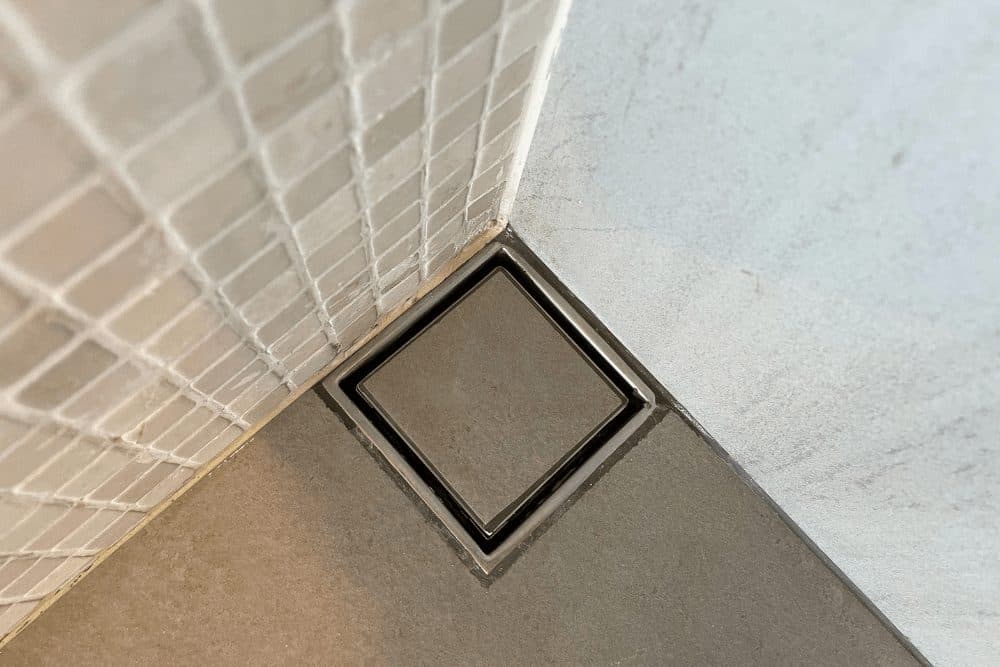
Corners and the junction between wall and floor are the weak points. We reinforce them with flexible tape or corner pieces and use flexible sealant, not rigid grout, where two surfaces meet. The drain is connected to the membrane, so water cannot run behind it.
Curing and testing
A membrane needs time to cure, and the time depends on the product. We follow the manufacturer's cure time. In a shower or a floor over an occupied unit, we can flood-test the area with water for a set period before tiling, and check that the water level stays steady, so a leak is found before it is hidden under tile.
A shower floor
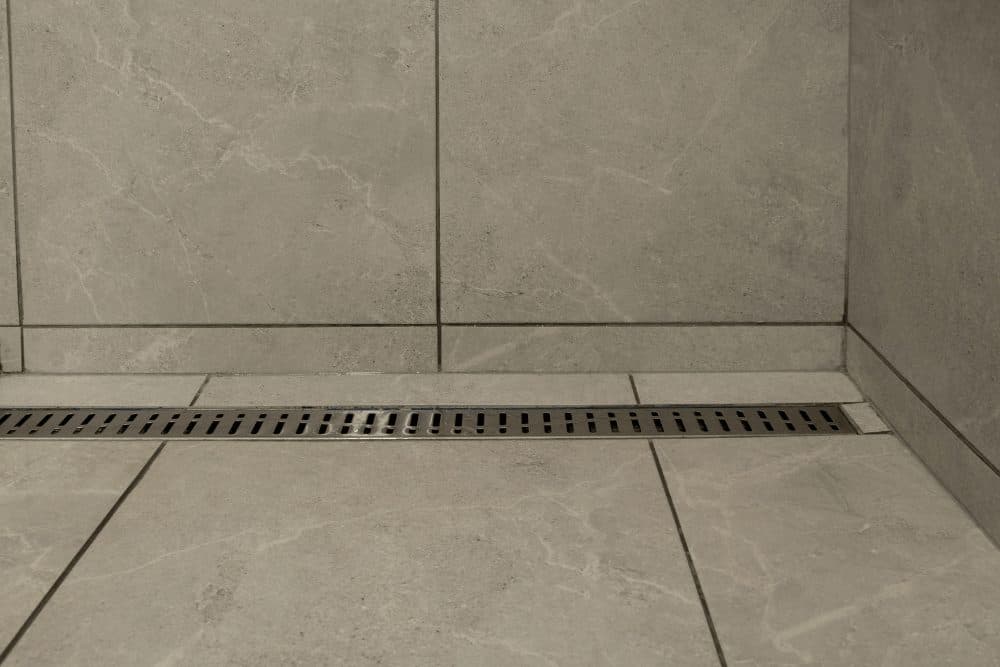
A shower floor needs a fall to the drain, a membrane, and a tile that grips. Small tiles or mosaic follow the fall and give grip. Large-format tiles can also work in a shower, with a linear drain and a single-direction fall, but they need exact setting-out. We discuss the options at the inspection.
Glass screens and fixtures
If you fit a glass screen or a shower fitting after tiling, the holes drilled through the tile and membrane have to be sealed. We tell the plumber and the glazier where the membrane is, and we recommend fitting after tiling, with proper sealant.
Choosing bathroom tiles: material and finish compared
Most bathroom tiles in Dubai are ceramic, porcelain, natural stone or mosaic. They differ in water absorption, grip, cost and upkeep.
| Material | Water resistance | Grip when wet | Upkeep | Where it suits |
|---|---|---|---|---|
| Ceramic | Good, glazed surface | Depends on the finish | Easy | Walls, low-traffic floors |
| Porcelain | Very good, dense and low absorption | Good in textured finishes | Easy | Floors, walls, showers |
| Natural stone (marble, travertine, granite) | Varies by stone, needs sealing | Varies; polished is slippery | Sealing and care | Walls, vanity areas, floors with a honed finish |
| Mosaic (ceramic, glass, stone) | Depends on the material | Good from the many joints | More grout to clean | Showers, niches, feature walls |
| Large-format porcelain | Very good | Good in textured finishes | Fewer joints to clean | Walls and floors, flat bases |
Porcelain or ceramic?
Porcelain is denser and takes less water, so it suits floors and showers. Ceramic is lighter and cheaper, and suits walls. A budget bathroom often uses porcelain on the floor and ceramic on the walls.
Natural stone in a bathroom
Marble and travertine look luxurious. They are porous, so they need sealing before and after grouting, and they stain from soap, limescale and some cleaners. Polished stone is slippery when wet. A honed or textured stone is safer on a floor. If you want stone, we choose the stone, the finish and the sealer together. Our marble polishing team can restore polished stone later.
Marble-effect porcelain
A porcelain tile printed to look like marble gives the look with less upkeep, and it does not stain the way stone does. Look at a full box and not a single sample, because the pattern repeats and the variation is part of the look.
Mosaic and feature tiles
Mosaic tiles suit shower floors and niches, and they make a good feature wall. They have more grout joints, which means more cleaning and more sealing. Glass mosaic needs a suitable adhesive, and we plan for it.
Kitchen tiles in Dubai: floors, walls and backsplashes
Kitchen tiles in Dubai have a different job from bathroom tiles. A kitchen is not wet in the same way. It faces grease, heat, dropped objects and constant cleaning, and the floor, the walls and the backsplash each take it differently.
| Area | What it faces | What we recommend |
|---|---|---|
| Floor | Grease, spills, dropped pans, foot traffic, cleaning | A hard-wearing, slip-resistant porcelain, with a joint that is easy to clean |
| Backsplash | Heat, steam, grease splashes, daily wiping | A non-porous tile such as porcelain, ceramic or glass, in a size that suits cleaning |
| Walls away from the hob | Light splashes | Washable paint or tile, as you prefer |
Floors, backsplashes and walls can be tiled with the same tile or with different ones. A matching floor and wall gives a calm look. A contrasting backsplash adds a focus. We plan the layout so the lines meet and the cuts fall in the right places.
If you tile the kitchen floor at the same time as the living area, we plan the join, the height and any threshold, so the floor flows without a step.
If the whole kitchen is being redone, our kitchen renovation in Dubai page shows where the tiling sits in the order of work.
Kitchen floor tiles in Dubai
Kitchen floor tiles in Dubai take more punishment than almost any other floor in the home, and the best ones are chosen for how they wear and how they clean.
Porcelain is the usual choice
Porcelain is dense, hard and low in water absorption, so it resists stains, grease and impact better than most ceramics. A textured or matt finish gives grip when the floor is wet or greasy. Glossy tiles look sharp and slip more.
Grip and cleaning
Grease on a smooth tile is slippery. A matt or lightly textured finish has grip and cleans with a mop. A heavy texture grips more and holds dirt in the grooves, so it needs a brush. Choose the grip that suits your household. Families with children and older people should favour grip. Ask the supplier for the slip rating of the tile.
Tile size and joints
Larger tiles mean fewer joints to clean. Grout joints in a kitchen soak up grease, so a stain-resistant grout, such as epoxy, in a mid-tone colour hides marks better than white. A dark grout hides dirt and a light grout shows it.
Heavy items and impact
Kitchen floors take dropped pans, heavy appliances and trolleys. A dense porcelain with an even base under it resists chipping. A hollow-sounding tile cracks under a dropped weight, which is why we tap-test before grouting.
Level and flatness
Kitchen floors meet cabinets, appliances and doors, and they need the right height. A floor that is too high stops the dishwasher door or the fridge from fitting. We plan the finished floor level with you and the kitchen fitter before tiling, and we tile under the cabinets only if the fitter agrees.
Underfloor heating in the kitchen
If you have or want underfloor heating in the kitchen, the tile and adhesive have to suit it, and the heating has to be switched on in stages after tiling. We follow the manufacturer's instructions.
A matching floor
If the kitchen is open to the living area, you may want the same floor throughout. Matching tile across rooms looks clean, and we plan movement joints at the thresholds to avoid cracks.
Kitchen backsplash tiles
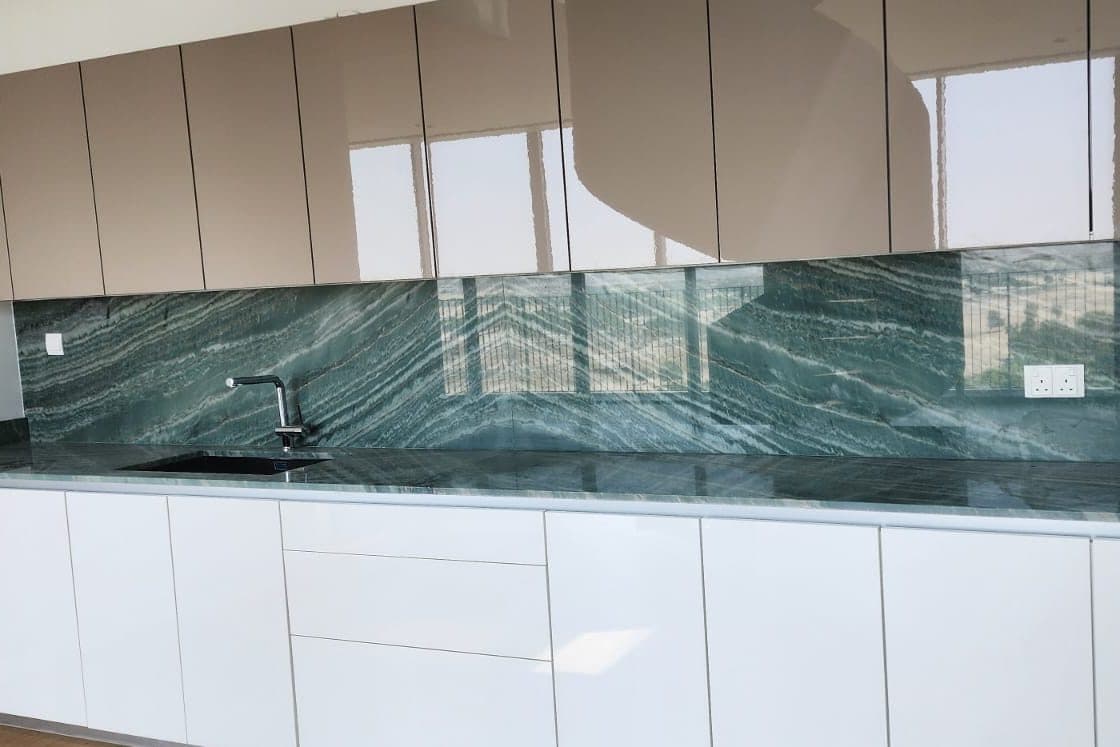
A backsplash protects the wall behind the hob and sink, and it is the part of a kitchen people look at most. It is also the easiest kitchen tiling job to do well, and the one where small decisions show.
Which tile
| Tile | Look | What to know |
|---|---|---|
| Porcelain and ceramic | Wide choice of colours and patterns | Easy to clean, hard-wearing |
| Subway tile | Classic rectangular tile | Simple, easy to lay, timeless |
| Mosaic | Small tiles, many joints | More grout to clean |
| Glass | Smooth, reflective | Needs a suitable adhesive and a clean wall |
| Metal-effect | Contemporary | Check heat suitability near the hob |
| Large slab | Few joints, clean look | Needs a flat wall and careful cutting |
A large tile is easier to wipe than a mosaic, because it has fewer joints. A mosaic adds texture.
Behind the hob
The wall behind a hob takes heat and grease. Use a non-porous tile that tolerates heat, and keep the manufacturer's clearance between the hob and anything flammable. Check the hob and the tile instructions, and tell us the hob model so we plan around it.
Joints and sealing
Grout joints soak up grease. Epoxy grout resists staining and cleans easily. We seal the junction between the backsplash and the worktop with flexible sealant, not grout, because the two move differently.
Height
A backsplash usually runs from the worktop to the underside of the wall cabinets. If there are no cabinets, we agree the height with you, and a full-height tile behind the hob gives a continuous look. We plan the layout so no thin sliver of tile falls at the edge.
Sockets and switches
Sockets, switches and fixings are cut into the tile. We mark them at the layout stage, and the electrician makes them safe before tiling and refits them after.
Replacing an old backsplash
An old backsplash can often be removed and replaced in a day or two without touching the cabinets. We protect the worktop, remove the old tile and adhesive, repair the wall and tile the new one.
Grout and sealant in wet rooms
Grout fills the joints and sealant fills the movement points. Both fail first in a bathroom or kitchen, and both can be chosen to last.
| Material | What it is | Where we use it |
|---|---|---|
| Cement-based grout | The standard grout, porous unless sealed | Walls, dry areas, with sealing in wet areas |
| Epoxy grout | A resin grout, stain-resistant and waterproof | Showers, kitchen floors, backsplashes |
| Flexible sealant (silicone) | A flexible joint filler | Corners, tops of tiled walls, around baths, sinks and worktops |
Where silicone goes, not grout
Where two surfaces meet, such as wall and floor, wall and bath, tile and worktop, the joint has to move. Rigid grout cracks there. We use flexible sealant instead, and we do not paint over it.
Grout colour
Grout colour sets the look. A grout that matches the tile gives a smooth surface, and a contrasting grout outlines each tile. White grout shows dirt in kitchens and bathrooms, and a mid-grey or sand tone hides marks better. We show a sample before grouting.
Mould in grout
Black spots in grout are mould, and they come from damp and poor ventilation. Epoxy grout and good ventilation reduce them. Cleaning with a suitable cleaner removes surface mould, and if it returns, the cause is moisture, not the grout.
Sealing
Cement grout and natural stone need sealing with a suitable sealer. Sealers wear off, and the frequency depends on the product and the use, so we follow the sealer manufacturer's instructions and give you the interval for the product we use.
Cleaning
Use pH-neutral cleaners, and avoid acids on natural stone and on some grouts. Wipe shower walls after use, and keep the extractor fan on. We give you cleaning advice for the products we use at handover.
Small bathrooms and rented homes
Most bathrooms in Dubai apartments are small, and most apartments are rented. Both facts affect what to tile.
Small bathrooms
- Use fewer, larger tiles. Fewer joints make a small room look larger and are easier to clean.
- Run the tile in one direction. A pattern that runs along the length lengthens the room, and across it widens it.
- Keep colours light and continuous. A single colour from floor to wall removes visual breaks.
- Plan the niche. A niche saves a shelf and space.
- Light the tile. A mirror and good lighting do more for a small bathroom than a feature tile.
Overlaying existing tiles
Sometimes new tile can go over old. This raises the floor, adds weight, and can hide moisture problems. In a small bathroom, a higher floor can stop the door opening, and the extra thickness can change the shower or the toilet connection. We advise at the inspection whether overlaying is possible, and we recommend removal when it is not.
Rented bathrooms and kitchens
If you rent, retiling needs your landlord's written permission, and often the building's permission as well. Most tenants cannot retile at their own cost without agreement. If you are the landlord, a retile is a repair that can add value and reduce complaints. We help you prepare the request and we give a written scope and price to attach to it.
Between tenants
If you are a landlord re-letting, a bathroom regrout and reseal is a cheap way to refresh a bathroom without a retile. We offer regrouting and resealing as a separate job.
How a bathroom or kitchen retile runs, with timings
A bathroom retile follows an order that cannot change, because each layer waits for the one below. The timing depends on the size, the condition and the drying times.
Step 1: Inspection. We check the room, measure, note moisture and repairs and agree the tile, layout, grout and trims. The inspection fee is AED 100, and a written quote follows.
Step 2: Protection and removal. Floors and adjoining rooms are covered. Old tiles are removed, the debris is cleared and the base is exposed.
Step 3: Base repair and levelling. The base is repaired, cleaned and levelled, and the fall to the drain is set.
Step 4: Waterproofing. The membrane is applied and left to cure. In a shower, we can flood-test before tiling.
Step 5: Layout and fixing. Tiles are dry-laid, and then set in adhesive, checked for level and flatness.
Step 6: Grouting and sealing. Joints are grouted once the adhesive has set. Corners are sealed with flexible sealant, and stone is sealed.
Step 7: Snagging and handover. We walk the room with you, tap-test tiles, check falls and joints and correct what we find. The one-year workmanship warranty starts at handover.
Typical durations
| Job | Typical duration |
|---|---|
| Kitchen backsplash | 1–2 days |
| Bathroom floor only | 1–2 days |
| Bathroom walls only | 2–3 days |
| Kitchen floor | 2–4 days |
| Full bathroom retile with waterproofing | 5–8 days |
| Removal of old tiles | Add 1–2 days |
The waterproofing membrane has to cure before tiling, and the grout has to cure before the room is used. The product's guidance sets those times, and we state them in the quote.
Living at home during the work
A full bathroom retile takes the bathroom out of use for the duration. If your home has a second bathroom, the job is simple. If it does not, tell us, and we plan the job in stages and keep the time short. A kitchen retile limits cooking, and a backsplash alone is quick and keeps most of the kitchen usable. We keep the work area clean, and we clear dust and debris daily.
Building rules
We follow the working-hour rules of your building or community. Where weekends or evenings are allowed and approved, we use them to shorten the schedule. Tell us the building when you contact us, and we plan around lift booking, deliveries and permits.
Bathroom and kitchen tiling cost
The cost of tiling a bathroom or kitchen in Dubai follows the area, the tile, the state of the base and what is included. A bathroom is a small area with a high amount of work per square metre, because of waterproofing, cuts, trims and fittings.
Why a bathroom costs more per square metre
A bathroom has many small cuts, corners, niches, drains and trims. It needs waterproofing, and the walls are tiled as well as the floor. The labour per square metre is higher than for a plain living-room floor, and the minimum job reflects that.
How we price the work
We do not publish a per-square-metre rate for bathroom or kitchen tiling, because the price depends on the room, the tile, the layout, the waterproofing and the condition of the base. Each job is quoted in writing after the inspection. The tile price guide shows how to budget a finished floor.
| Job | Price |
|---|---|
| Bathroom floor tiling, per square metre (standard tile on a ready base) | Quoted after inspection |
| Bathroom wall tiling, per square metre | Quoted after inspection |
| Kitchen floor tiling, per square metre | Quoted after inspection |
| Backsplash tiling, per square metre | Quoted after inspection |
| Minimum job | Quoted after inspection |
| Waterproofing | Quoted after inspection |
| Removal of old tiles | Quoted after inspection |
| Large-format, stone, mosaic and patterns | Quoted after inspection |
| Supply and fix (tiles included) | Quoted after inspection |
Prices are shown before 5% VAT. The price that applies is the written quote after the inspection, and it lists each part so you see what you pay for.
Why a bathroom rate needs its scope
A rate per square metre means little unless it says what it includes: removal of old tile, waterproofing, preparation, adhesive, grout and VAT. Ask for the scope behind any rate you see, ours included. The written quote lists each part so you can compare like with like.
What moves the price
- Area. More area means more tile and time.
- Tile type. Large-format, stone and mosaic cost more to fix.
- Layout. Patterns, diagonals and many trims add cuts and time.
- The base. Levelling, repairs, falls and moisture add cost.
- Removal. Old tiles have to come up first, which adds labour, debris and dust control.
- Waterproofing. A shower or a wet floor needs a membrane under the tile.
- Fittings. Niches, drains and trims are separate lines.
- Supply. Who buys the tile, you or us, changes what the quote covers.
Read a bathroom or kitchen tiling quote
| Check | Why it matters |
|---|---|
| The area, and how it was measured | A low rate can hide a large room |
| Waterproofing named, with the product | Essential in wet rooms |
| Fall to the drain and levelling | A common extra |
| Removal and disposal of old tiles | Often added later as an extra |
| Grout type (cement or epoxy) and sealant | Sets durability |
| Trims, niches and fittings | Often left out |
| Tile supplied by whom, and the wastage allowance | Changes the total |
| VAT shown separately | Five per cent of a full-bathroom quote is a real sum |
| Payment schedule | A large deposit before the first tile is laid is a warning sign |
| Warranty in writing | A spoken promise is hard to enforce |
A bathroom quote far below the others may have left out waterproofing, removal or trims. Ask what it includes, and compare like with like.
Retile or regrout?
Replacing every tile is not always necessary. If the tiles are sound and only the grout has failed, regrouting costs a fraction of a retile.
| Sign | What it means | Usual fix |
|---|---|---|
| Dark, stained or cracked grout, tiles solid | Grout has aged, or mould is in the surface | Regrout and reseal |
| Silicone mouldy or peeling | Sealant has reached the end of its life | Replace the sealant |
| A few cracked or loose tiles | Local damage | Replace those tiles |
| Many hollow tiles | The adhesive bed has failed | Retile |
| Tiles lifting or stained from behind | Moisture behind the tile | Find the leak, waterproof and retile |
| Leak below the bathroom | Failed waterproofing | Strip, waterproof and retile |
| A tile style you no longer like | Cosmetic | Retile, or paint where suitable |
The tap test
Tap the tiles with a knuckle. A solid sound means the tile is bonded, and a hollow sound means a gap behind it. A few hollow tiles can be replaced. Many mean the whole bed has failed.
Painting over tile
In some cases a tiled wall can be painted with a suitable primer and paint, as a short-term change. It is not suitable for showers or places that get wet, and it does not last like a new tile. We say at the inspection whether it is an option.
Bathroom and kitchen tiles Dubai: where we work and how to get a quote
We offer bathroom and kitchen tiling in every community and building. We work across Dubai, including Dubai Marina, JLT, Downtown Dubai, Business Bay, Jumeirah Village Circle, Al Barsha, Dubai Hills, Arabian Ranches, Damac Hills, Mirdif, Dubai Silicon Oasis, Dubai Sports City, Motor City, Al Quoz, Deira, Bur Dubai and Dubai South. If your area is not listed, we cover it too.
We handle bathroom tiles Dubai-wide and kitchen tiles Dubai-wide. Typical jobs include:
- Kitchen floor tiles Dubai homes need after a renovation.
- Bathroom wall tiles Dubai owners want refreshed.
- Tiles for bathroom floor Dubai buyers choose for grip.
Tell us about the room before we visit. Message us on WhatsApp at +971 55 209 9785 with:
- The building and area, and whether the home is occupied.
- The room: bathroom, kitchen, floor, walls, shower or backsplash.
- The size of the room, in square metres or square feet.
- The tile you have chosen: type, size, finish, and whether you supply it.
- Photos of the room, including leaks, stains, cracks and existing tiles.
- Your preferred dates, and any deadline such as a handover.
- Building rules: working hours, lift booking, permits.
We reply with what the photos let us price and what needs inspection. The inspection costs AED 100. The written quote that follows lists the work, the products, the price before VAT, the schedule and the warranty terms.
Keep reading
Frequently asked questions about bathroom and kitchen tiles in Dubai
How much do bathroom tiles cost in Dubai?
The price follows the area, the tile, the state of the base and what is included. Published rates differ because they do not cover the same scope. We quote after inspection, and the written quote lists tiles, labour, waterproofing, removal and fittings separately. Prices are before 5% VAT.
What are the best tiles for a bathroom floor in Dubai?
A porcelain tile with a matt or textured finish and a slip rating suited to wet areas. Ask the supplier for the rating of the tile you are buying, and avoid polished tiles on a wet floor.
Do I need waterproofing under bathroom tiles?
Yes, in showers, around baths and on bathroom floors. Grout is not waterproof, and a membrane under the tile stops water reaching the slab and the walls. We apply the membrane and let it cure before tiling.
How long does a bathroom retile take?
A full bathroom retile with waterproofing takes about five to eight days. A bathroom floor alone takes one to two days, and walls two to three. The quote states the schedule.
What tile is best for a kitchen floor?
A hard-wearing porcelain with a matt or lightly textured finish and a joint that is easy to clean. Epoxy grout in a mid-tone resists grease and stains.
Can you tile a kitchen backsplash without redoing the kitchen?
Yes. We protect the worktop, remove the old tile, repair the wall and tile the new backsplash, usually in one to two days.
Should I use epoxy grout?
In showers, kitchen floors and backsplashes, yes, because it resists stains and water. Cement grout is fine on dry walls, with sealing.
Can I live at home during a bathroom retile?
Yes, if there is a second bathroom to use. Without one, we plan the retile in stages so that the bathroom is out of use for as short a time as we can manage.
Do you supply the tiles?
Yes. We offer a supply-and-fix option under one quote, and we help you choose and order. If you buy your own, we check the delivery for quantity, breakage and batch.
Do you work weekends and evenings?
Where your building or community allows and approves it, yes. Some fix their working hours, and we follow them. Tell us your deadline when you ask for the quote.
Our guide to tiles in the UAE covers the rest of the path, from choosing a tile for any room to the finished floor.
Get a quote for bathroom and kitchen tiles
Tell us what you need, or send photos on WhatsApp. A site inspection costs AED 100, and you get a written quote after the visit.
- +971 55 209 9785
- info@dubairepairpro.com